



Osteochondrosis is a disease in which degenerative-dystrophic changes are diagnosed in the cartilaginous tissues of the spine, also associated with disorders in the structure and functionality of the intervertebral discs.Depending on the location of the damaged tissue, osteochondrosis of the cervical, thoracic and lumbar regions is distinguished.
According to medical statistics, the symptoms of osteochondrosis are observed in 50-90% of the population.The average age of appearance of osteochondrosis is 30-35 years.In unfavorable conditions, signs of osteochondrosis may appear at an earlier period, especially with prolonged uneven loads on the back, legs and the consequences of injuries.
What is osteochondrosis?
Osteochondrosis is a disease of the spine in which degenerative and dystrophic lesions of the intervertebral discs occur.With the development of osteochondrosis, degenerative-dystrophic lesions spread to the tissues of the vertebrae.
The main sign indicating the development of osteochondrosis is pain in the neck, back and lumbar region;as it progresses, the pain "radiates" into the arms, chest, shoulders, and upper thighs.With the negative dynamics of osteochondrosis, atrophy of muscle tissue, sensory disturbances and dysfunction of internal organs, provoked by their compression and displacement, begin.In the absence of timely treatment, osteochondrosis develops into an incurable condition.
Causes of osteochondrosis
The main factor in the development of osteochondrosis is the uneven load on the back.A common cause of improper load distribution is the habit of carrying a bag on one shoulder or in one hand, the wrong sitting position, sleeping on an overly soft mattress, high pillow and wearing anatomically incorrect types of shoes.
Additional risk factors include physical inactivity, a sedentary lifestyle, excess weight, injuries to the back, lower extremities, flat feet and other disorders of the musculoskeletal system, as well as age-related degenerative processes due to age-related changes in the blood supply to the spine.
The following factors may also play a role in the etiology of osteochondrosis:
- physical overload of the body;
- neuro-emotional fatigue;
- metabolic disorders, poisoning, diseases of the gastrointestinal tract that prevent the complete absorption of nutrients;
- occupational hazards, in particular, working on vibration platforms;
- genetic predisposition;
- poor posture during the period of active growth, scoliosis;
- wearing uncomfortable shoes (tight, heels);
- prolonged and/or regular dehydration;
- poor diet, hypovitaminosis;
- smoking;
- pregnancy, especially multiple pregnancy, in combination with an underdeveloped musculo-ligamentous apparatus (due to a shift in the body's center of gravity).
Stages of development of osteochondrosis

Osteochondrosis in the dynamics of the disease goes through four stages:
- Stage 1 (degree) osteochondrosis is characterized by the initial stage of pathology in the nucleus pulposus of the intervertebral disc.Due to the excessive load, the process of dehydration (dehydration) of the core begins, which leads to a decrease in the height of the disc and the appearance of cracks in the fibrous ring.Symptoms at this stage, as a rule, are absent;slight discomfort may occur during prolonged stay in an uncomfortable static position or active movement;
- in stage 2, a decrease in the height of the discs leads to a decrease in the distance between the vertebrae and the hanging of the spinal muscles and ligaments.This causes increased mobility of the vertebrae with affected discs, which is dangerous due to their displacement or slippage.During the second stage of the disease, discomfort and pain appear, especially with certain types of load, movements, positions;
- Stage 3 (degree) of osteochondrosis is characterized by the formation of prolapses and protrusions of the intervertebral discs and may be accompanied by subluxations and/or development of arthrosis of the intervertebral joints.With some types of movements, patients feel stiffness, lack of mobility, and a feeling of tingling and numbness may appear in the limbs.At this stage of osteochondrosis, the pain is clearly felt in the back, neck, lumbosacral region or coccyx area, depending on the location of the affected discs;
- in stage 4 of osteochondrosis, the body tries to correct the consequences of vertebral hypermobility and adapt to the impaired functioning of the spine.Osteophytes, new bone formations, improve the fixation of the vertebrae, are formed at the points of contact between the vertebrae.However, in some cases, osteophytes can cause nerve compression and damage the vertebrae.Fibrous ankylosis begins in the intervertebral discs and joints.In the absence of microtraumas and crushed nerve roots, the symptoms of the disease disappear.
Symptoms of osteochondrosis
The main symptoms of osteochondrosis are a feeling of discomfort and/or pain in the neck and back.The severity of the sensations and the presence of additional symptoms depend on the stage of the disease.During the examination of the patient and the collection of anamnesis, the specialist makes a primary diagnosis, suggesting the presence of osteochondrosis by a distinct visual curvature of the spine, observed in the transverse or longitudinal plane of the spine.Pathologies of the intervertebral discs of the cervical and lumbar spine are much more common than degenerative and dystrophic changes in the sternum.
The signs of osteochondrosis that the patient feels include a periodic or permanent feeling of back fatigue, mild or severe pain, depending on the stage of the disease.The pain can be localized in the neck, back, chest, shoulder girdle, making it difficult and limiting the movements of the upper extremities.
The clinical picture of osteochondrosis depends mainly on the localization of the pathology, the rate of development of the process and the individual characteristics of the patients.Intervertebral disc pathology, displacements, protrusions, hernias and growth of osteophytes lead to various consequences.Among the most common are disorders of normal blood circulation in tissues, compressed nerve endings, dysfunction of the spinal canal, edema, fibrosis of tissues and structures.Such consequences can be associated with many different symptoms, leading to a wrong diagnosis of diseases.
The most common and characteristic symptoms of osteochondrosis include the following:
- pain in the back, neck, lower back, shoulder girdle, rib area;
- discomfort, stiffness in body movements that occurs in certain body positions, bending, turning, increased muscle tension;
- feeling of numbness in the upper and lower extremities;
- discomfort in muscles and joints, muscle spasms;
- headache, dizziness, increased fatigue;
- pain in the heart area;
- impaired sensitivity of the hands;
- muscle hypotonia.
Symptoms of osteochondrosis vary depending on the location of the pathology:
- with osteochondrosis of the cervical spine, pain prevails in the neck, arms and shoulder girdle, radiating to the scapula and shoulder area;headache, dizziness, burning "spots" or drops before the eyes and tinnitus are observed;
- if the thoracic spine is affected, the pain is localized in the chest, heart, inner surface of the shoulder, armpit area, discomfort in breathing is also observed, shortness of breath is possible;
- Osteochondrosis of the lumbosacral spine is manifested by pain in the lower back that radiates to the legs, upper thighs or pelvic organs, often accompanied by sexual dysfunction.
Superficial symptoms - back fatigue, pain - can indicate not only the presence of osteochondrosis, but also the addition of other diseases or the development of other pathological processes and disorders that are not related to the degeneration of the intervertebral discs.The diagnosis of "osteochondrosis" can only be made by a specialist, and self-medication for such symptoms is unacceptable.
Classification of osteochondrosis
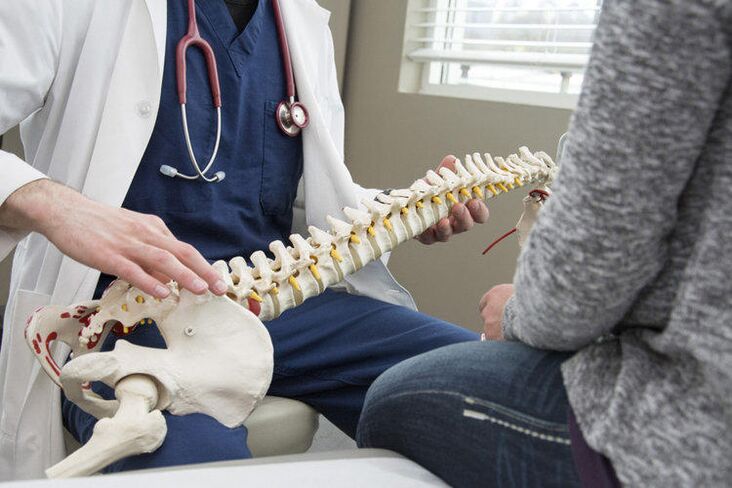
Types of osteochondrosis are distinguished according to several principles.Depending on the location of the pathology, combined diseases of cervical, thoracic, lumbar, sacral or mixed osteochondrosis are distinguished.According to clinical manifestations, osteochondrosis of different locations is divided into subtypes depending on the identified symptoms and the clinical picture as a whole.
Osteochondrosis of the cervical spine:
- depending on the type of reflex syndrome, cervicalgia, cervicocranialgia, cervicobrachialgia with different manifestations (vegetative-vascular, neurodystrophic, muscular-tonal) are identified;
- if the test result for radicular syndrome is positive, discogenic damage to the roots of the cervical spine is diagnosed.
For the pathology of the thoracic level there are:
- for reflex syndromes - thoracalgia with vegetovisceral, neurodystrophic or muscle-tonal manifestations;
- from radicular damage - discogenic of the roots of the thoracic region.
For osteochondrosis of the lumbosacral level, it is diagnosed as follows:
- depending on the type of reflex syndrome - lumbago (lumbago), lumbodynia, lumboischialgia with vegetative-vascular, neurodystrophic or muscle-tonal manifestations;
- radicular syndrome indicates discogenic damage to the roots of the lumbosacral region;
- radicular vascular syndrome indicates radiculoischemia.
Diagnosis of osteochondrosis
To make a diagnosis, instrumental examination methods are used:
- X-ray examination of the spine;
- myelography;
- neurological examination of sensitivity, reflexes.
Additional methods described to differentiate and clarify the diagnosis and stage of the pathology include:
- computed tomography (CT) of the spine;
- nuclear magnetic resonance (NMR);
- magnetic resonance imaging (MRI).
Therapy guidelines for osteochondrosis
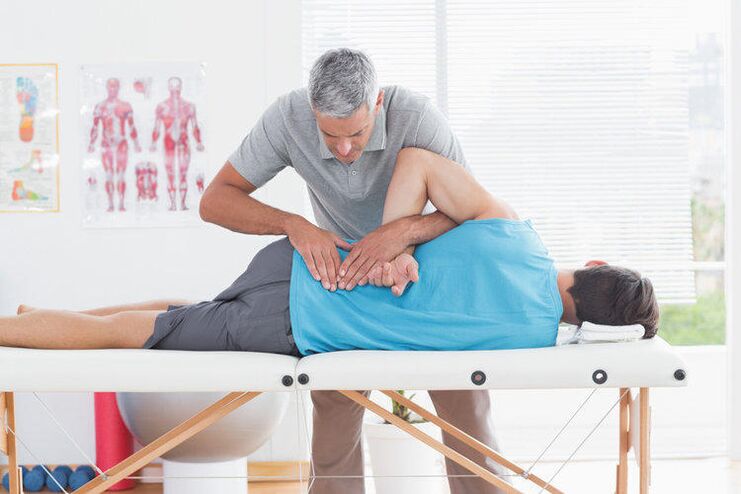
The treatment is based on an integrated approach and, depending on the stage, lasts from 1 to 3 months of intensive therapy and 1 year of supportive measures to consolidate the result and prevent relapses.
Therapy for the disease of osteochondrosis is carried out in two directions, depending on the degree of osteochondrosis and the patient's state of health.Conservative treatment of the disease consists of taking medications and performing a group of exercises.Surgical treatment in almost every situation cannot be the method of first choice and is prescribed in the absence of positive dynamics or progression of the disease against the background of long-term conservative therapy.
In addition to medical methods of therapy, it is necessary to follow the general recommendations for osteochondrosis: follow a diet, take the necessary measures for rehabilitation.
Conservative treatment of osteochondrosis
Conservative therapy aims to relieve pain, normalize the functioning of the spine and prevent negative changes
Conservative treatment of osteochondrosis includes the following types of therapy:
- drug therapy.Medicines for osteochondrosis are used to relieve pain syndromes, inflammatory processes in the tissues and to normalize the body's metabolic processes.In case of severe pain syndrome, it is recommended to use drug blockades of nerve endings, which also help to reduce the severity of muscle-tonic syndrome.The following types of blockades are distinguished: blockade of the trigger point, intraosseous, facet, paravertebral, epidural;
- physiotherapy methods.Physiotherapy procedures help to reduce pain, increase the effect of medications and are also used during the rehabilitation period.The most common uses are ultrasonic waves, magnetic fields, low frequency currents and laser beams;
- methods of physical therapy (physiotherapy) and kinesitherapy.A set of special exercises, when performed regularly and correctly, helps correct posture, strengthen the muscle corset, ligamentous apparatus, normalize muscle function, reduce compression of nerve fibers and help prevent complications of osteochondrosis.Exercise therapy methods and kinesitherapy procedures are aimed at normalizing metabolic processes, restoring adequate nutrition of the intervertebral discs, restoring the location of the vertebrae and the discs between them, and evenly distributing the load on the musculoskeletal system;
- massage.Manual massage techniques are used to improve blood supply to tissues, relieve muscle spasms and tension, and generally improve blood circulation.Hydromassage as a direction of therapeutic activity, in addition to the listed effects, helps to normalize the functioning of the body's nervous system;
- manual therapy.Manual therapy methods are selected on an individual basis.A targeted effect on the musculoskeletal system of the body helps improve blood circulation, lymphatic circulation, improves metabolism, helps correct the mobility of the musculoskeletal system, strengthens the immune system and serves as a means of preventing complications of osteochondrosis;
- withdrawal therapy(traction) of the spine using special equipment.The purpose of the manipulations is to increase the intervertebral space to normal parameters and correct the structural disorders of the spine.
Osteochondrosis: drug therapy
In the treatment of osteochondrosis, medications are aimed at reducing the severity of symptoms, improving the processes of blood supply to tissues and their regeneration.Osteochondrosis cannot be cured only by taking medications;therapy should be combined, including exercise groups, diet and preventive measures.
In the absence of pronounced dystrophic changes and pain, taking medications without a doctor's prescription can be considered unjustified.
Medicines used for pain relief and treatment of osteochondrosis:
- anti-inflammatory group;
- antioxidant preparations: vitamin C (in the form of ascorbic acid), E (tocopherol acetate), N (thioctic acid);
- means for improving tissue blood supply, B vitamins (mainly B3);
- preparations for the regeneration and/or prevention of cartilage tissue degeneration, hyaluronic acid.
Medicines can be prescribed both in the form of ointments, creams for local use for pain, as well as for oral administration and injections.
In case of acute complications, drugs are used to block nerve endings.
Osteochondrosis: dietary nutrition of the patient
The principles of the diet are based on the need to improve metabolic processes, saturate the body with essential nutrients, vitamins, minerals and include foods high in antioxidants, unsaturated fatty acids and ingredients that promote the regeneration of cartilage tissue.The drinking regime recommended for osteochondrosis is aimed at preventing dehydration of the body, which can negatively affect the affected tissues.You should eat in small portions, 5-6 times a day.
The basis of the diet is milk and fermented milk products, lean meat, poultry, fish, fresh vegetables, fruits, nuts and seeds, cereals and mushrooms.It is especially recommended to include meat and fish jelly in the diet, meat with jelly, dishes with jelly and the use of extra virgin olive oil without heat treatment (for salads).
Preferred methods of food processing: steaming, baking, boiling.Limit the intake of flour and confectionery products, fatty foods, spicy, salty dishes and spices, canned and smoked foods, strong meat juices, legumes, sugar and fruits with a high sugar content (grapes).During the day, you should drink at least 1.5 liters of fluids, giving preference to pure and mineral water, dried fruit compotes, sugar-free fruit drinks and herbal teas.You should limit the amount of strong black tea, coffee, sweet carbonated drinks and alcohol.
Complications of osteochondrosis
Non-compliance with the prescribed treatment, prolonged avoidance of the doctor and lack of treatment for osteochondrosis contribute to the progression of the disease and provoke the development of complications, pathologies and new diseases, such as:
- herniated intervertebral discs (spinal hernia);
- extension;
- kyphosis;
- radiculitis;
- salt deposits in the intervertebral space;
- spinal cord injury;
- decrease in the muscle mass of the limbs, muscle atrophy due to blood supply disorders;
- paralysis of the lower limbs.
Despite the fact that grade 4 osteochondrosis can occur without symptoms and severe pain, advanced osteochondrosis is the most dangerous for the development of serious complications and can lead to the patient's disability.
Prevention of osteochondrosis

The causes of osteochondrosis are mainly related to the lack of attention to the body's requirements, poor nutrition and excessive stress on the body.To prevent the appearance of pathological changes in the spine and to curb the dynamics of existing osteochondrosis, it is recommended to adhere to the general principles of a healthy lifestyle:
- eliminating the possibility of physical inactivity: moderate sports: exercise, running, swimming, cycling, skiing, gymnastics, wrestling without contact, etc.;
- When working or other activities that involve staying in a static position for a long time, you should take warm-up breaks every 45 minutes to restore blood circulation.If you need to sit for a long time, you should choose the right chairs, chairs that provide support for the spine, ensure compliance with the standards for the position of your hands on the table, feet on the floor or a special posture, learn to maintain your posture (back straight, shoulders relaxed);
- for night sleep, you should choose an elastic mattress, preferably orthopedic, with a flat surface, avoid high or very flat pillows;
- if necessary, lift and/or carry heavy objects, avoid vibrations when lifting weights from a semi-sitting position, use special belts that support the lower back;
- choosing the right orthopedic shoes: with the right width for the foot, without high heels and replacing them in time will help reduce the load on the back, this is especially important for women during the period of childbirth.In summer you should not neglect the opportunity to walk barefoot on uneven surfaces;it strengthens the leg muscles and relieves tension from the musculoskeletal system;
- A proper diet and drinking regimen contribute to overall health and help maintain normal metabolism;
- If you are prone to increased emotionality, anxiety with a spasmodic reaction of muscles to stress, it is worth learning relaxation methods, as well as regularly taking courses in restorative massage.